Back to LeadersIdeology Conservative liberalism, British imperialism, anti-communism and anti-Nazism Fate Died in London on January 24, 1965, following a stroke
United Kingdom · 1940–1945, 1951–1955
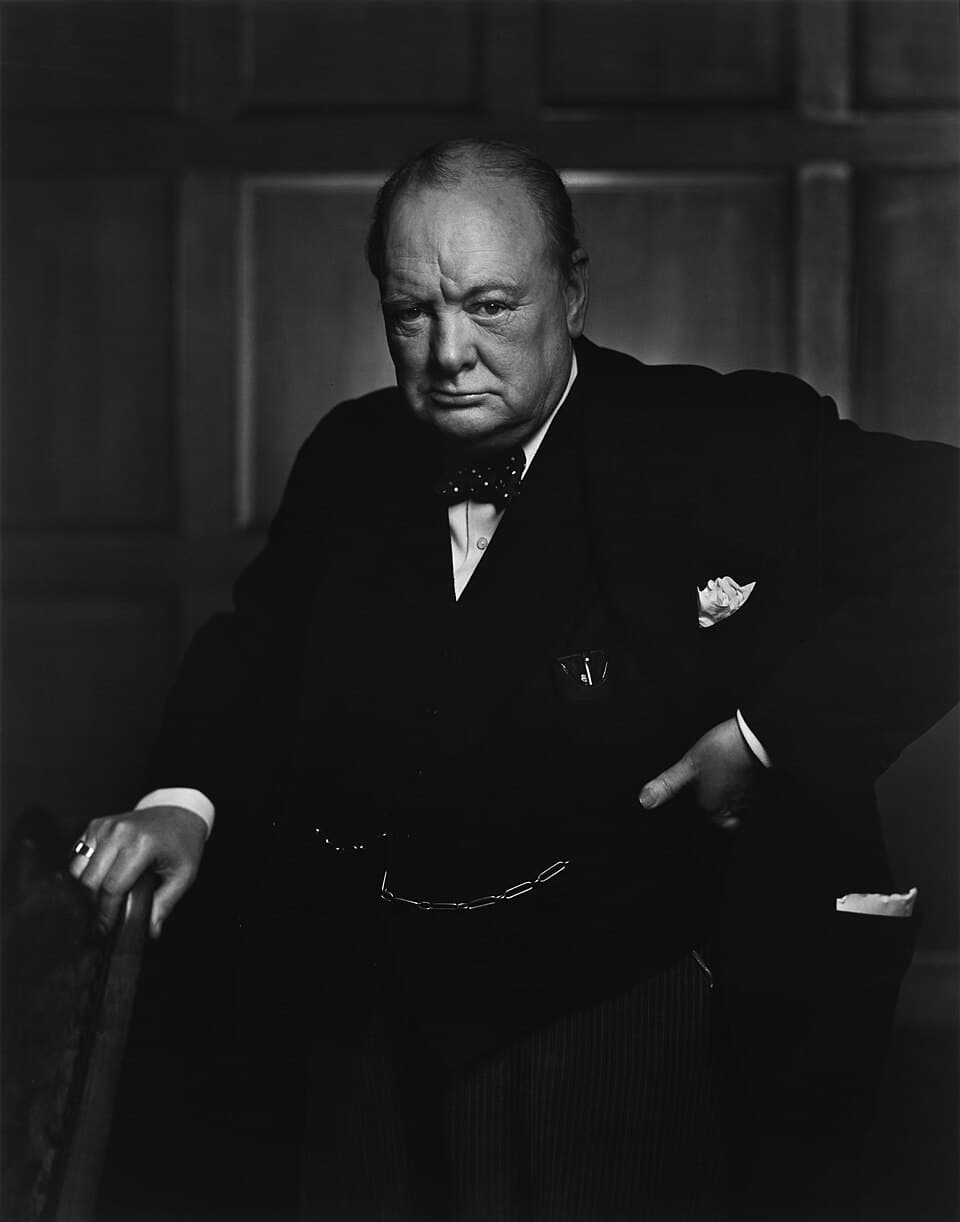
Winston Churchill
1874–1965
Biography
Winston Leonard Spencer Churchill was born at Blenheim Palace in 1874 to an aristocratic family. He served as a military officer in India, Sudan, and South Africa and became a celebrated war correspondent. He was first elected to Parliament in 1900.
Churchill switched between the Liberal and Conservative parties, holding many government posts including First Lord of the Admiralty in WWI. He spent the 1930s in the political wilderness, warning about Hitler and opposing appeasement.
Appointed Prime Minister in May 1940, at Britain's darkest hour, Churchill declared "We shall never surrender" and transformed national will into a war instrument. He forged the alliance with the United States through his relationship with Roosevelt and the Lend-Lease program, and coordinated the Three-Power alliance with Stalin.
Churchill's legacy is complex. While celebrated as a symbol of defiance against tyranny, his imperial record carries serious shadows. His decisions during the 1943 Bengal Famine contributed to its scale, and his recorded statements reflect racial attitudes that must be honestly acknowledged. These are part of the full historical record.
He was awarded the Nobel Prize in Literature in 1953 and died in 1965, leaving behind a contradictory but historically towering legacy as the leader who helped steer the Allied coalition to victory.
Image source: Library of Congress / Wikimedia Commons (public domain)
This is an educational conversation with an AI simulation based on historical record. Responses are not endorsements of any ideology; the goal is historical understanding only.
Conversation with Winston Churchill
Start the conversation with a historical question...