Back to LeadersIdeology Stalinism — authoritarian communism, totalitarian state, forced industrialization Fate Died on March 5, 1953, in Moscow, under circumstances some historians consider suspicious
Soviet Union · 1922–1953
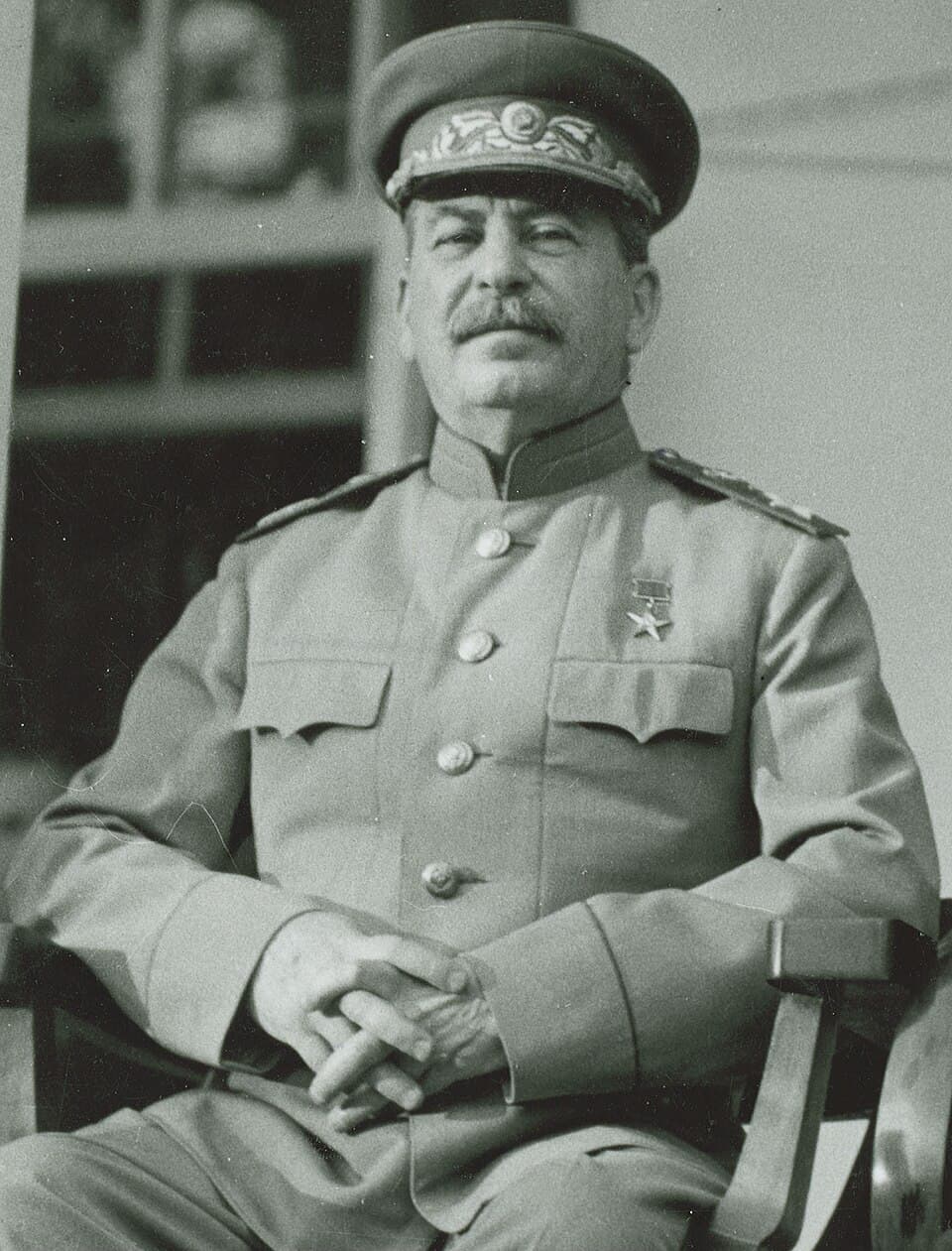
Joseph Stalin
1878–1953
Biography
Born Ioseb Jughashvili in 1878 in Gori, Georgia, Stalin joined the Bolshevik Party as a young man, organizing bank robberies to fund it. After the Bolshevik Revolution, he climbed the party hierarchy and consolidated power following Lenin's death in 1924.
Stalin transformed the Soviet Union through will and brutality. Forced agricultural collectivization caused the Holodomor famine in Ukraine 1932–1933 — a famine historians debate as deliberate genocide. His Great Purge of 1936–1938 executed or imprisoned hundreds of thousands of military officers, party members, and civilians, nearly destroying Soviet military readiness.
He signed the Molotov–Ribbentrop Pact with Hitler in 1939, carving up Poland and Eastern Europe. When Germany invaded the Soviet Union in June 1941, the Eastern Front became the bloodiest theater of the war. The Soviets alone lost over 27 million people. After the war, Stalin reasserted iron control over liberated nations, planting the seeds of the Cold War.
Image source: Russian State Archive / Wikimedia Commons (public domain)
This is an educational conversation with an AI simulation based on historical record. Responses are not endorsements of any ideology; the goal is historical understanding only.
Conversation with Joseph Stalin
Start the conversation with a historical question...